Fast models that stand in for slow simulations.
A course on how surrogate models are built, tested and trusted, with reference pages.
The course
9 units, 41 lessons, read in order.
For engineers who simulate and for machine-learning engineers new to simulation data. Unit 1 needs no background; later units use some engineering maths and short Python examples.
How the lessons are set: conventions used in this course. Outside books, lectures, guides and blog posts: reading material. A tick marks finished lessons, kept in this browser only.
The guide · PDF
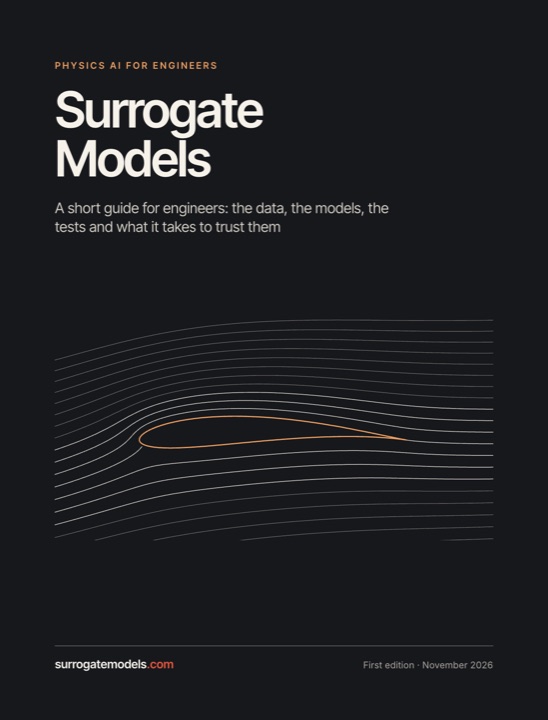
Surrogate Models: A Short Guide for Engineers
The data, the models, the tests and what it takes to trust them: the course’s main ideas in 36 pages, with references. Free for newsletter subscribers.
Reference and tools
Catalogues of models and techniques, the history of the field, open-source code, and further reading.
- Model atlasThe main surrogate models side by side, grouped by the data they read, and an index of techniques linked to their lessons.
- History and lineagesFrom response surfaces to neural fields, then four families of field surrogates, each from its founding idea to 2026.
- Get started and frameworksFour steps from open data to a trained surrogate, and the open-source code to start from.
- Reading materialBooks, lectures, guides and documentation from outside the site, by topic.
- BlogsPosts and essays by people working in the field, by topic.
In industry
How surrogates are used across industries, with recent examples and three worked cases.
- Where surrogates are usedMuch of engineering design relies on simulation. Surrogates can help where a solver is too slow for the number of questions and data covers the designs in question.
- AerospaceAerodynamic loads, performance and thermal design across the flight envelope, explored before committing to tunnel and flight tests.
- AutomotiveDrag, lift, cooling, thermal and aeroacoustic design of vehicles; a trained surrogate usually answers in a small fraction of the time of overnight CFD.
- ElectronicsTemperature and electromagnetic behaviour in chips, packages and boards, where design and run-time decisions often need fast answers.